Mulberry
Morus alba
- Energy
- 43kcal
- Native
- —
- Top Producer
- IND
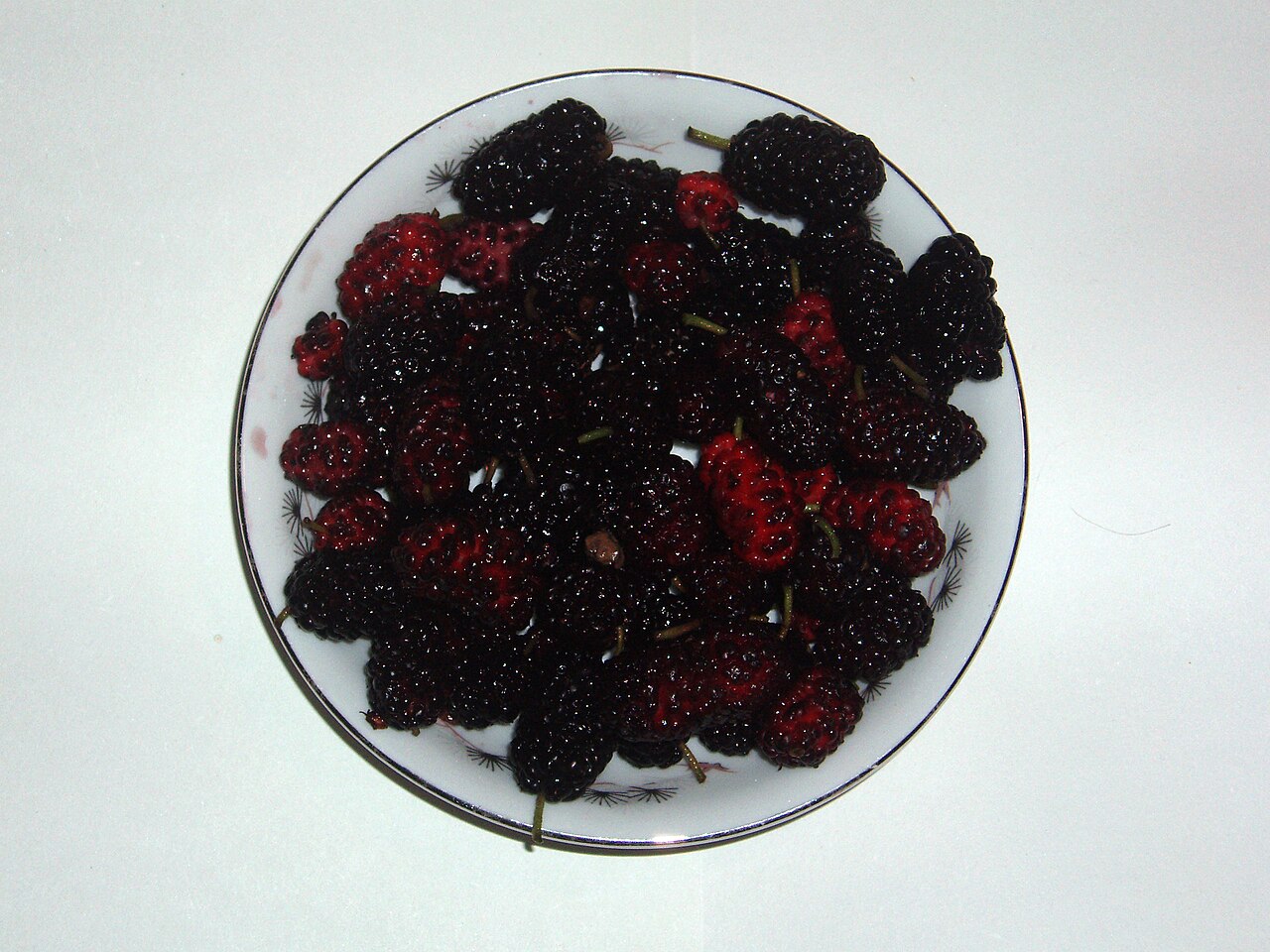
Photo: Taken by Fanghong · CC BY 2.5
Where it comes from
Morus, a genus of flowering plants in the family Moraceae, consists of 19 species of deciduous trees commonly known as mulberries, growing wild and under cultivation in many temperate world regions. Generally, the genus has 64 subordinate taxa, though the three most common are referred to as white, red, and black, originating from the color of their dormant buds and not necessarily the fruit color, with numerous cultivars and some taxa currently unchecked and awaiting taxonomic scrutiny. M. alba is native to South Asia, but is widely distributed across Europe, Southern Africa, South America, and North America. M. alba is also the species most preferred by the silkworm. It is regarded as an invasive species in Brazil, the United States and some states of Australia.
Where it grows
Note · Inside FAO 'Other fruits'
Source: FAO STAT — Crops and Livestock Products, 2024
Things worth knowing
- 01
The mulberry genus, Morus, includes 19 species of deciduous trees, commonly referred to as mulberries.
- 02
While its exact native region is unknown, mulberries now grow wild and cultivated in many temperate areas worldwide.
- 03
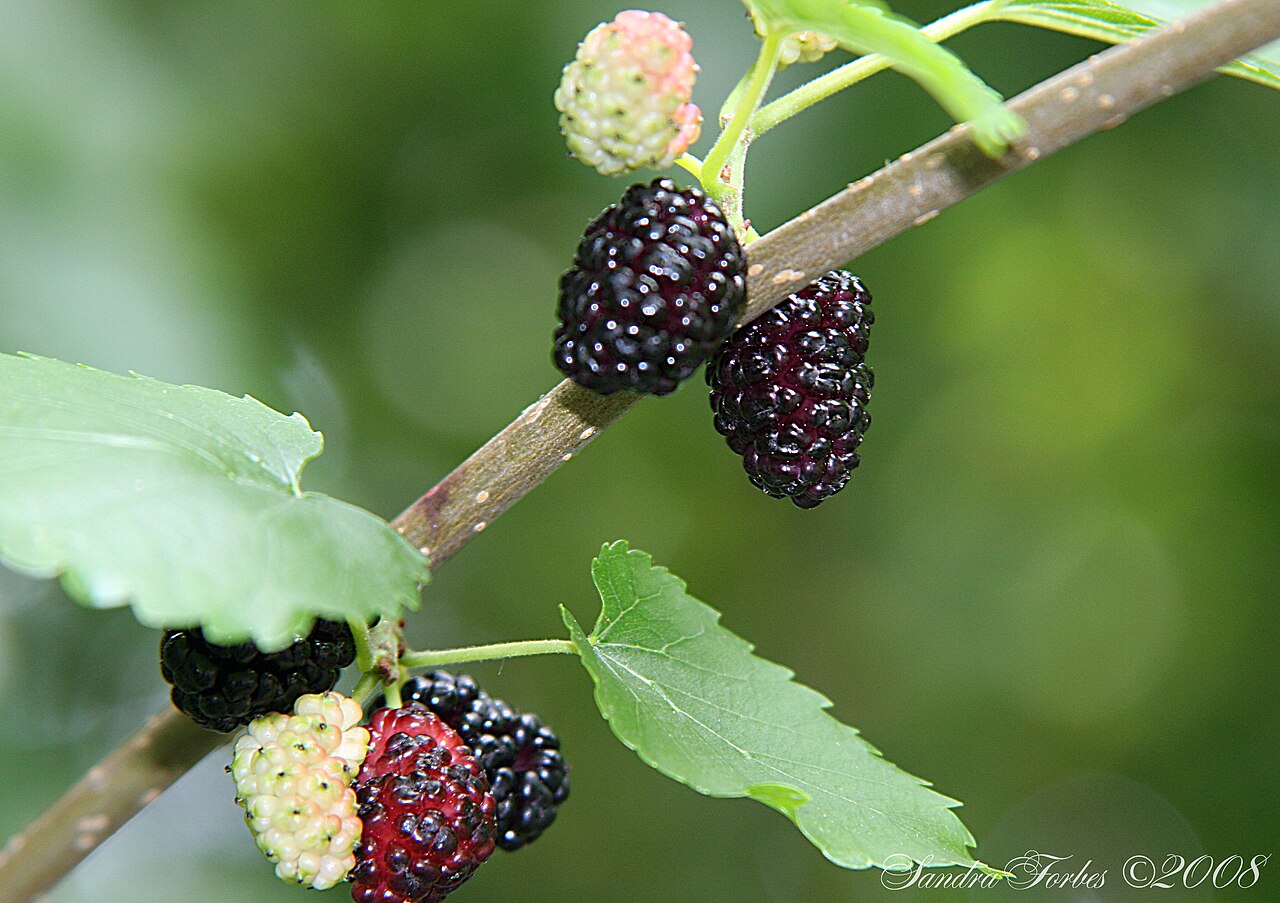
The most common types are white, red, and black mulberries, named for the color of their fruit.
- 04
Globally, India is the top producer of mulberries, contributing significantly to the world's annual production.
- 05
Mulberries are botanically classified as berries, despite their tree-borne growth.
Health & nutrition
- Mulberries are a source of dietary fiber, which may support healthy digestion.
- These berries provide Vitamin C, an antioxidant that may contribute to immune system function.
- Potassium, found in mulberries, is a mineral that may play a role in maintaining fluid balance.
- The calorie content of mulberries is relatively low, making them a light snack option.
- Mulberries contain natural sugars, offering a source of energy.
Informational only · not medical advice
Culinary uses
Mulberries are enjoyed globally in various culinary applications. They can be eaten fresh, often picked directly from the tree, or used in pies, jams, and jellies. In some regions, mulberries are dried for later use or incorporated into baked goods like muffins and breads. Their sweet, slightly tart flavor also makes them a popular addition to smoothies and desserts.
![Marang - UploadWizard photos -- (General description, 3-dimension angle by angle photography of this town, church & landmarks) --Centro, downtown, town centre of Dupax del Norte, Nueva Vizcaya[1] - Scenery and landmarks, Dupax del Norte Central School in front of the Church -- the -Saint Ann](/photos/marang/01.jpg)