Salak
Salacca zalacca
- Energy
- 69kcal
- Native
- —
- Top Producer
- CHN
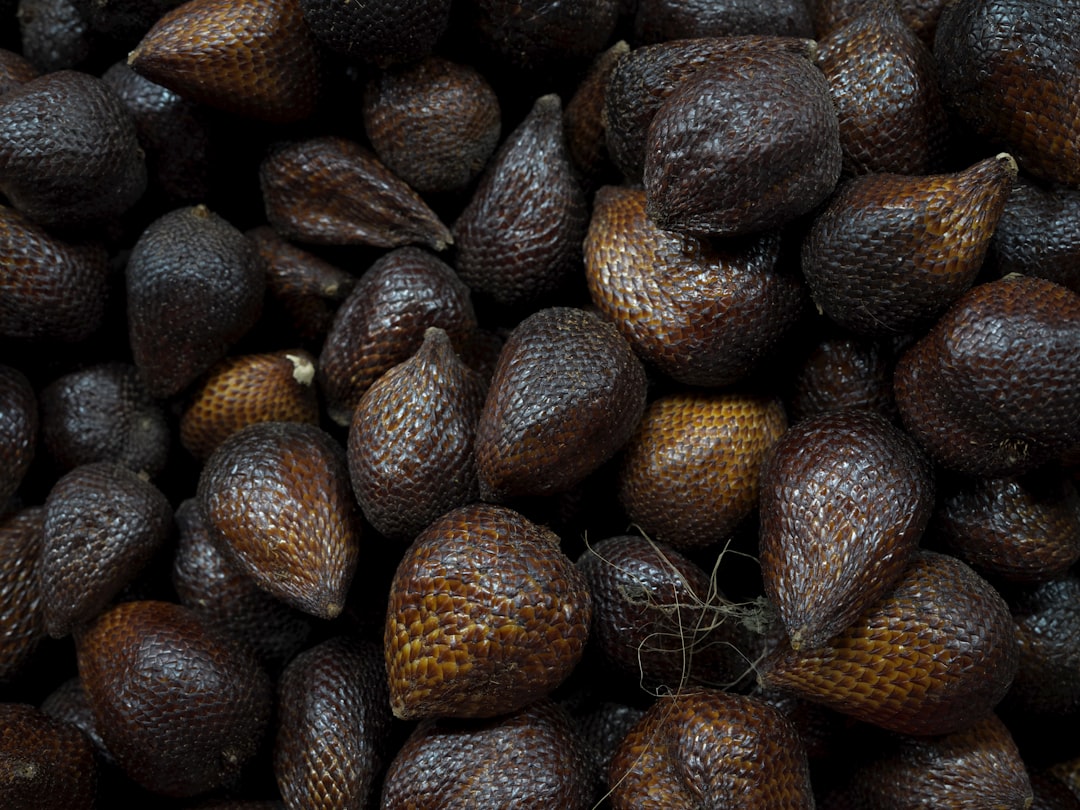
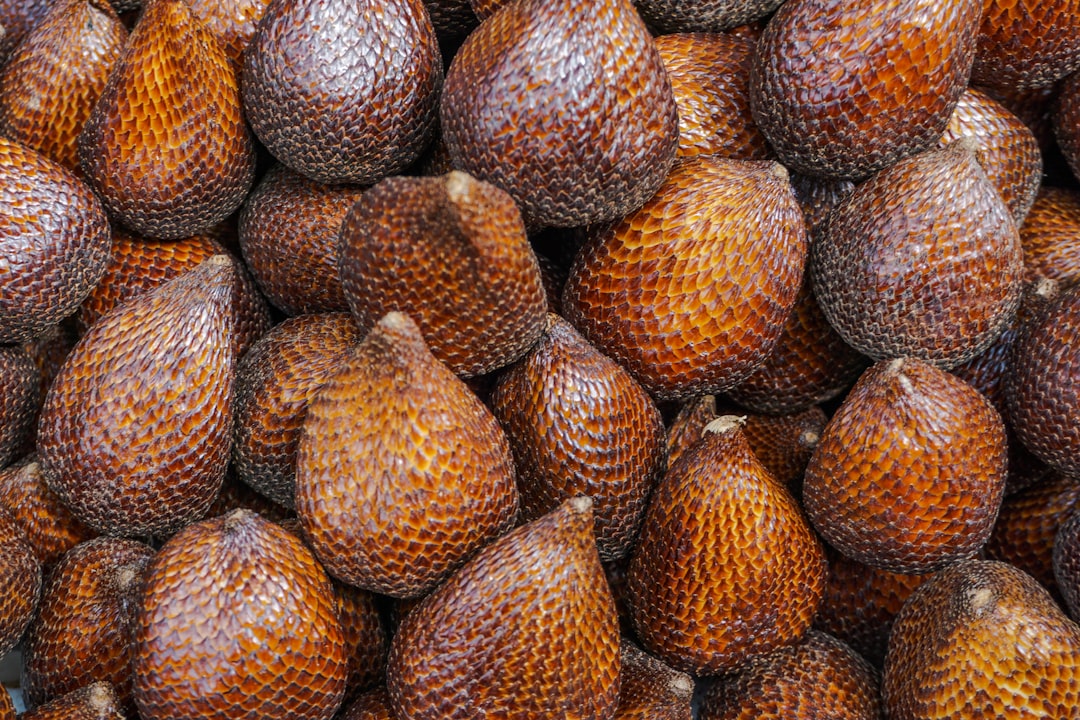
Photo: Timo K · Unsplash License
Where it comes from
Salak is a species of palm tree native to Java and Sumatra in Indonesia. It is cultivated in other regions of Indonesia as a food crop or snack, and popularly grown in Bali, Lombok, Timor, Maluku, Sulawesi and Papua.
Where it grows
Note · FAO 'Other tropical fruits'
Source: FAO STAT — Crops and Livestock Products, 2024
Things worth knowing
- 01
Salak, also known as snake fruit, comes from a species of palm tree with the scientific name Salacca zalacca.
- 02
While its exact native region is unknown, salak is popularly grown across many islands in Indonesia, including Bali and Sumatra.
- 03
China is currently the top producer of salak, contributing to a significant global production of 23.9 million tonnes annually.
- 04
This exotic fruit offers a good source of dietary fiber, with 5.30 grams found in every 100 grams of salak.
- 05
Salak is a notable source of Vitamin C, providing 54.1 milligrams per 100 grams, which is beneficial for overall well-being.
Health & nutrition
- Salak is a source of dietary fiber, which may support healthy digestion and contribute to a feeling of fullness.
- This fruit provides Vitamin C, an antioxidant that may help protect the body's cells from damage.
- The potassium content in salak may support healthy blood pressure levels when consumed as part of a balanced diet.
- With 69 kcal per 100g, salak offers a moderate energy intake suitable for curious eaters.
- The natural sugars in salak provide a source of energy for the body's daily functions.
Informational only · not medical advice
Culinary uses
Salak is primarily consumed as a fresh snack fruit, often enjoyed for its unique sweet and tangy flavor. It is cultivated and enjoyed throughout Indonesia, featuring prominently in local diets and as a popular regional snack. While less common globally, its exotic nature makes it an interesting ingredient for adventurous culinary exploration.
Specimen photographs