Asian Pear
Pyrus pyrifolia
- Energy
- 57kcal
- Native
- —
- Top Producer
- CHN
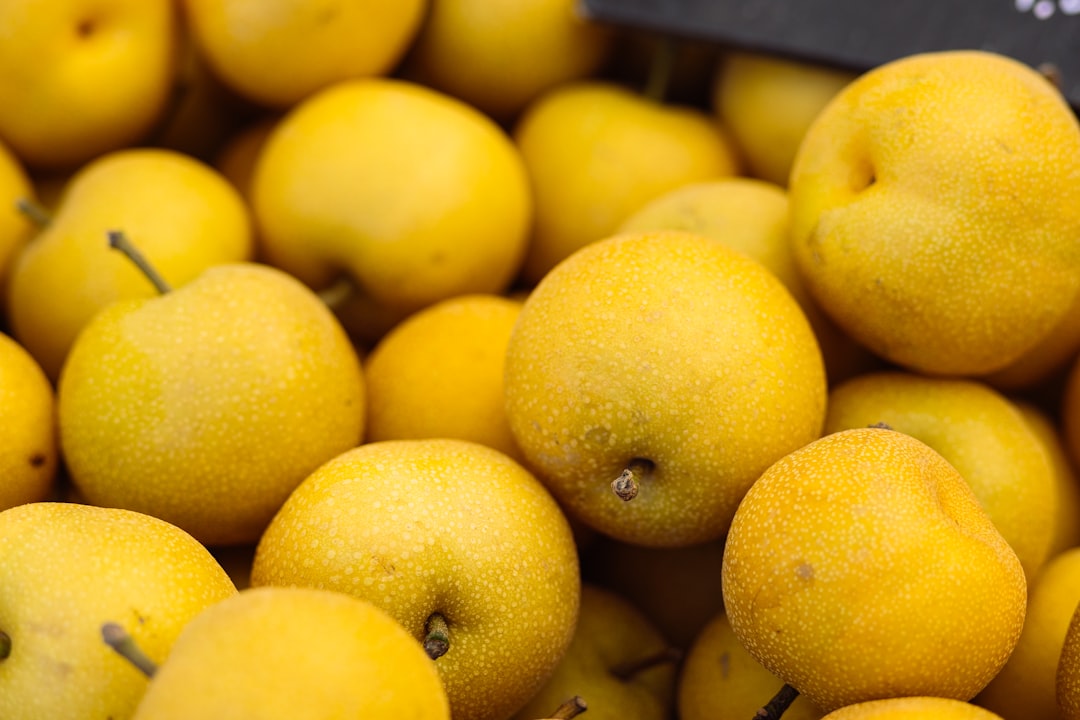
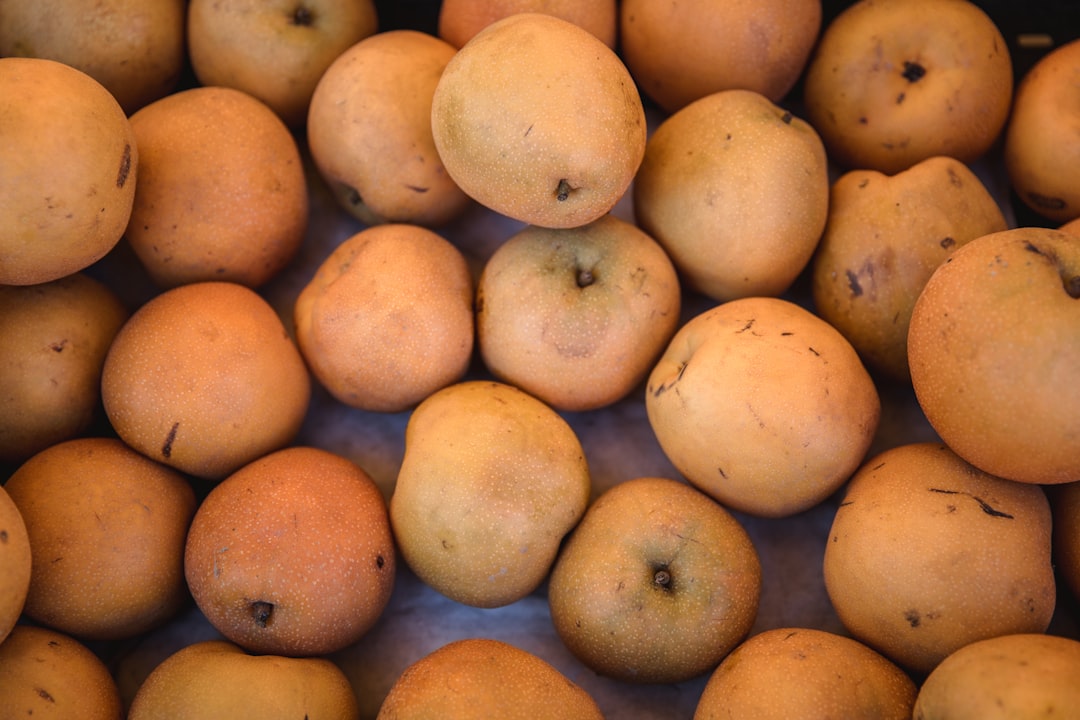
Photo: Jason Leung · Unsplash License
Where it comes from
Fruit commonly known as the Asian pear in different parts of the world :Pyrus pyrifolia, called “Korean pear”, “Japanese pear”, ”Chinese pear” or Nashi pear, usually round, with brown or yellow skin Pyrus × bretschneideri, called Ya pear or Chinese white pear, usually slightly elongated, with yellow skin.
Where it grows
Note · Counted under FAO Pears
Source: FAO STAT — Crops and Livestock Products, 2024
Things worth knowing
- 01
The Asian pear, also called Nashi, Korean, or Japanese pear, is a popular fruit with a unique crisp texture.
- 02
Despite its name, the native region of the Asian pear is actually unknown to botanists.
- 03
These pears typically have a round shape and can be found with either brown or yellow skin.
- 04
China is the top producer of Asian pears, contributing significantly to the global harvest of 27.6 million tonnes.
- 05
There are different varieties, including the Ya pear or Chinese white pear, which is usually slightly elongated with yellow skin.
Health & nutrition
- Asian pears are a good source of dietary fiber, which may support digestive health.
- They provide vitamin C, an important nutrient that may help boost the immune system.
- These pears contain potassium, a mineral that is essential for maintaining fluid balance.
- The fruit offers a modest amount of calories, making it a satisfying snack option.
- Fiber content in Asian pears can contribute to feelings of fullness, aiding in appetite management.
Informational only · not medical advice
Culinary uses
Asian pears are enjoyed worldwide, both raw and cooked. Their crisp, juicy flesh makes them a refreshing snack on their own. In East Asian cuisines, they are often incorporated into savory dishes, stir-fries, and braised meats, where their natural sweetness and subtle texture complement other ingredients. They can also be used in desserts like pies, tarts, and compotes, adding a unique fruity element.