Feijoa
Acca sellowiana
- Energy
- 61kcal
- Native
- —
- Top Producer
- —
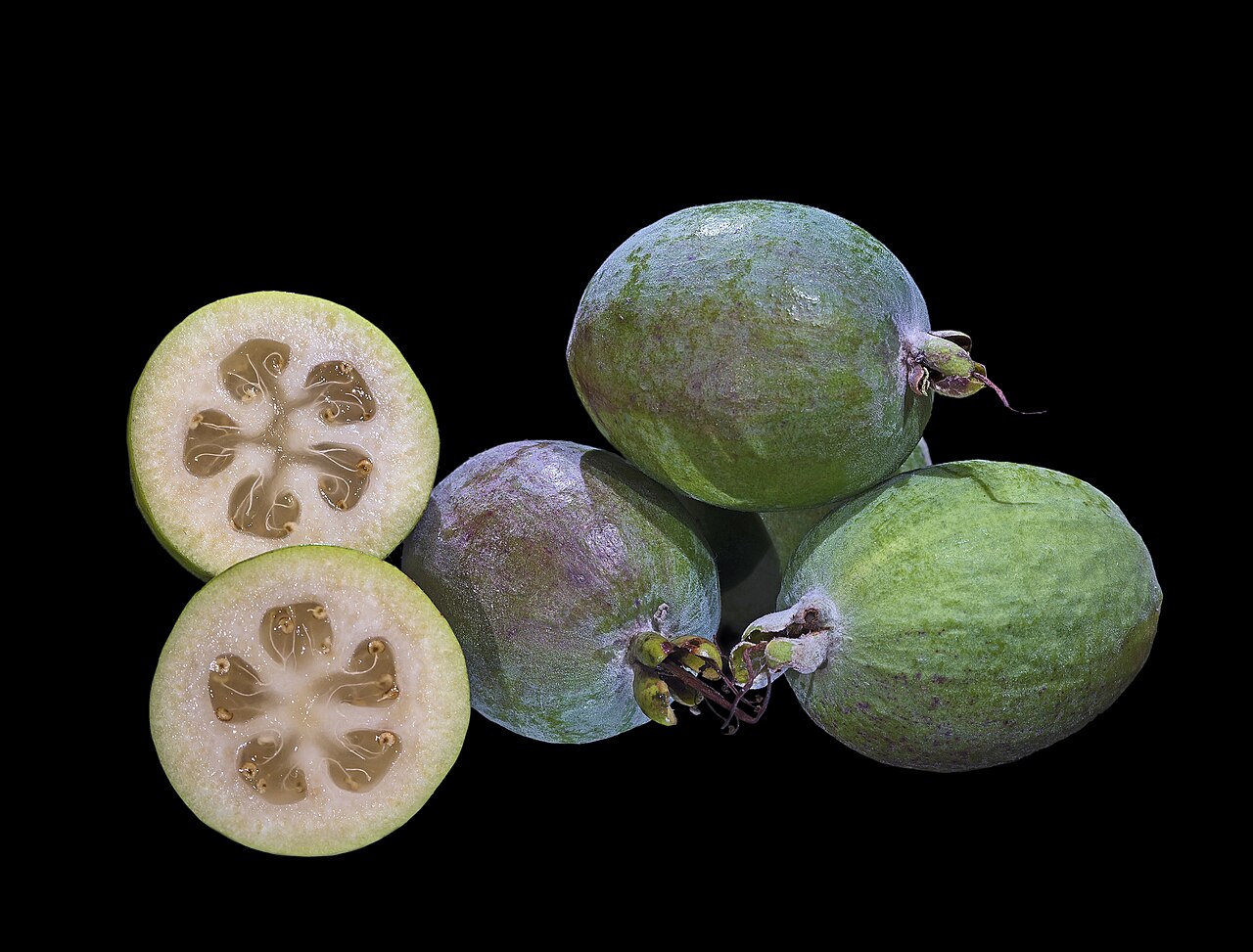
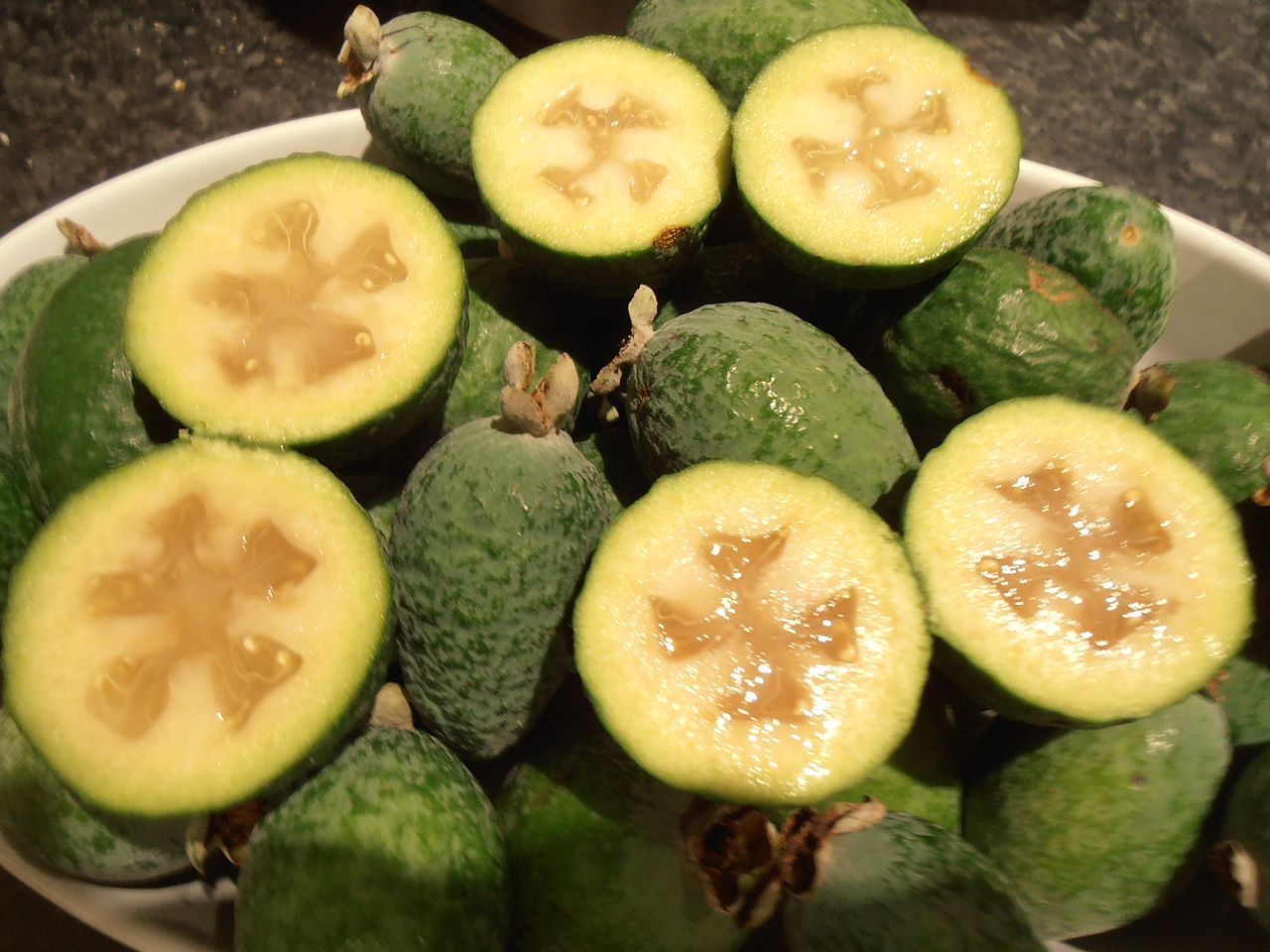
Photo: Didier Descouens · CC BY-SA 4.0
Where it comes from
Feijoa sellowiana, also known as Acca sellowiana (O.Berg) Burret, is a species of flowering plant in the myrtle family, Myrtaceae. It is the only species in the genus Feijoa. It is native mainly to the highlands of Colombia, southern Brazil and the hills of northeast Uruguay, but it can also be found in eastern Paraguay, northern Argentina and New Zealand. It is known as quirina or as feijoa.
Things worth knowing
- 01
The feijoa, scientifically known as Acca sellowiana, belongs to the myrtle family, Myrtaceae.
- 02
This unique fruit is the sole species within its genus, Feijoa, highlighting its distinctiveness.
- 03
While its exact origin is debated, feijoa is primarily found in the highlands of South America.
- 04
Feijoas can be enjoyed fresh, offering a delightful tropical flavor profile to adventurous eaters.
- 05
This exotic fruit is a good source of fiber, with 6.40 grams per 100 grams.
Health & nutrition
- Feijoa is a good source of dietary fiber, which may support digestive health.
- This fruit provides a notable amount of Vitamin C, an important antioxidant for the body.
- The potassium content in feijoas may contribute to maintaining healthy blood pressure levels.
- Feijoa can be a part of a balanced diet, offering essential nutrients.
- Consuming feijoa contributes to your daily intake of beneficial vitamins and minerals.
Informational only · not medical advice
Culinary uses
Feijoas are a popular fruit in their native South American regions, often eaten fresh. Their unique sweet and tart flavor makes them suitable for jams, jellies, and desserts. They can also be incorporated into smoothies, fruit salads, or used as a topping for yogurt and ice cream.