Goji Berry
Lycium barbarum
- Energy
- 69kcal
- Native
- —
- Top Producer
- —

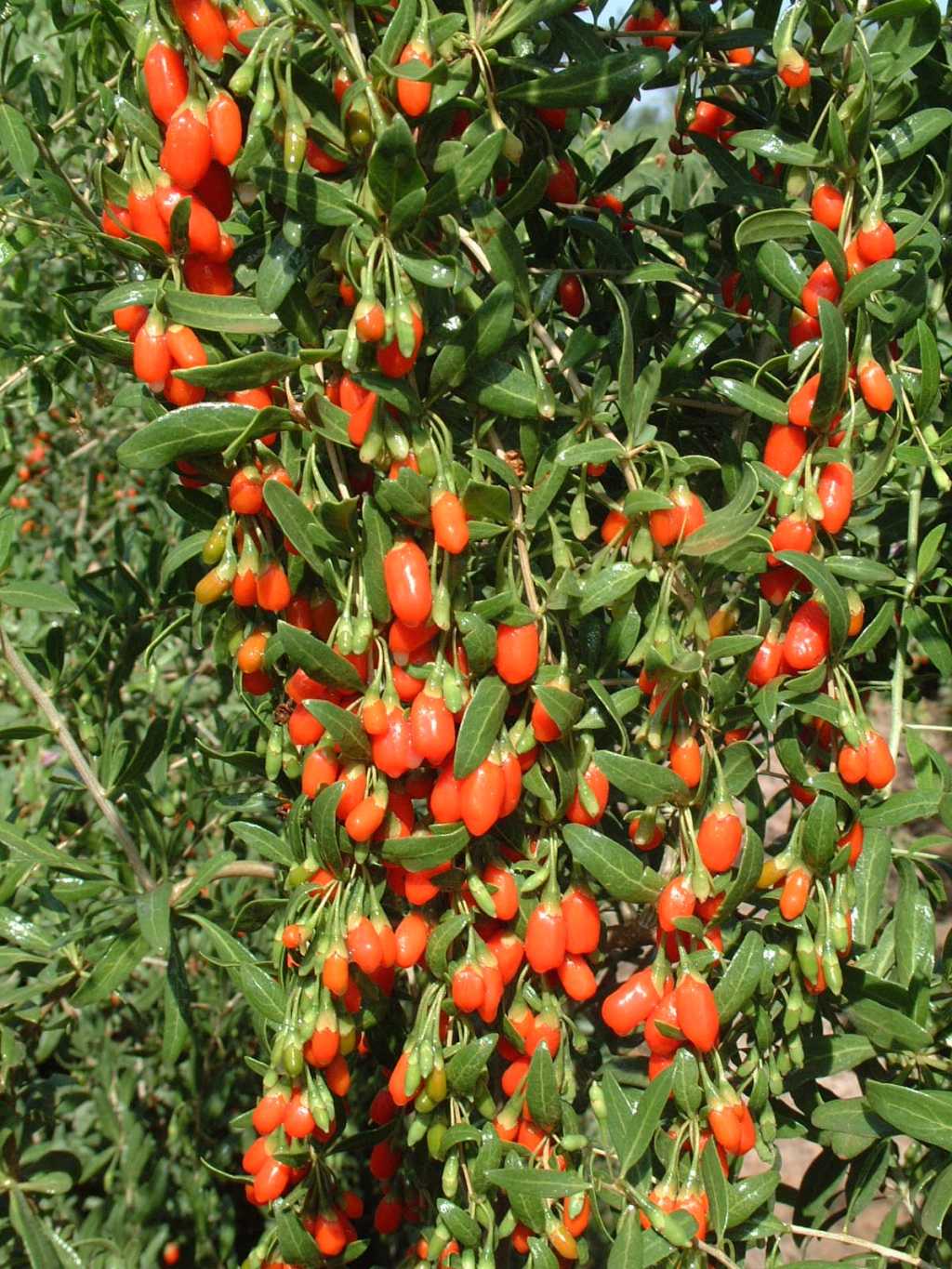
Photo: Pvt pauline · CC BY-SA 3.0
Where it comes from
Lycium barbarum is a shrub native to China, with present-day range across Asia and southeast Europe. It is one of two species of boxthorn in the family Solanaceae from which the goji berry or wolfberry is harvested, the other being Lycium chinense.
Things worth knowing
- 01
The goji berry, also known as wolfberry, comes from a shrub belonging to the Solanaceae family, which also includes tomatoes and potatoes.
- 02
While its exact native region is unknown, Lycium barbarum shrubs are now widely cultivated across Asia and southeastern Europe.
- 03
Goji berries are classified botanically as true berries, despite their small, concentrated size and vibrant color.
- 04
This potent berry packs a significant nutritional punch, offering a good source of dietary fiber per serving.
- 05
Interestingly, Lycium barbarum is one of two species of boxthorn shrubs from which the popular goji berry is harvested globally.
Health & nutrition
- Goji berries are a source of Vitamin C, which may support the immune system.
- The fiber content in goji berries may contribute to digestive health.
- Potassium, found in goji berries, is an important mineral for bodily functions.
- These berries provide energy, with 69 kcal per 100g, supporting an active lifestyle.
- As a source of antioxidants, goji berries may help protect cells from damage.
Informational only · not medical advice
Culinary uses
Goji berries are enjoyed worldwide in various culinary applications. They are frequently added to trail mixes, smoothies, and cereals for a nutrient boost. In traditional Chinese cuisine, they are often simmered in soups or brewed into teas. Dried goji berries can also be rehydrated and used in desserts or baked goods, offering a unique sweet and slightly tart flavor.