Star Fruit
Averrhoa carambola
- Energy
- 26kcal
- Native
- —
- Top Producer
- CHN
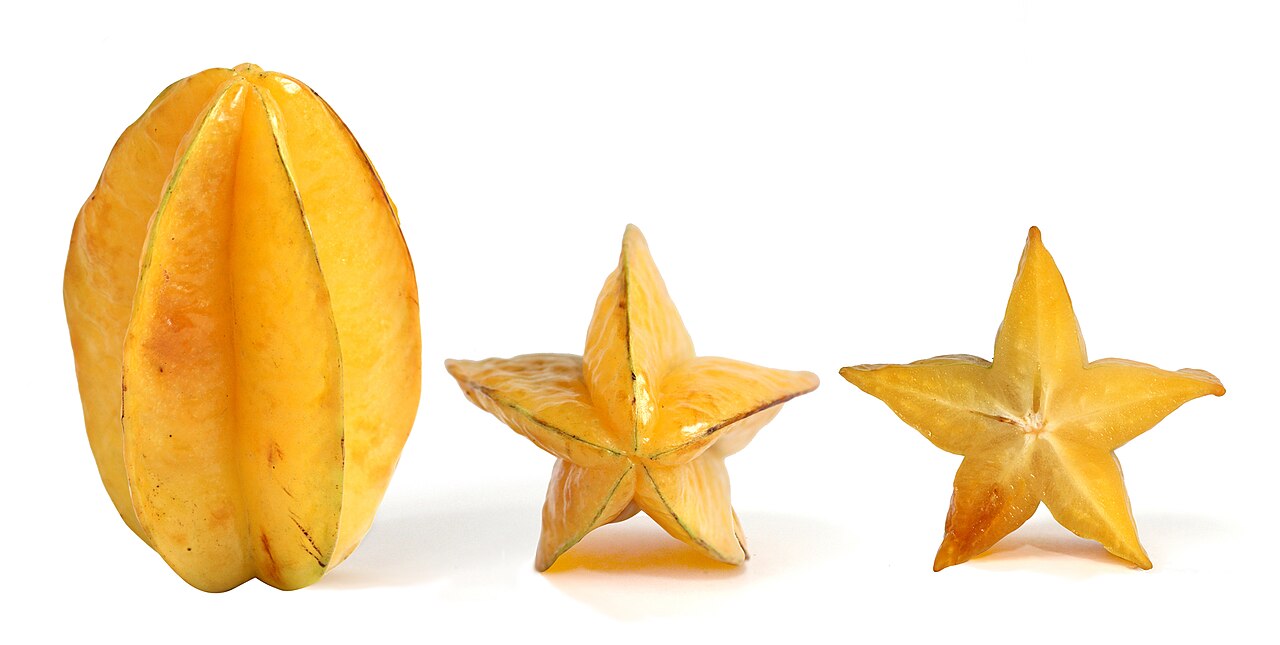
Photo: SMasters · CC BY-SA 3.0
Where it comes from
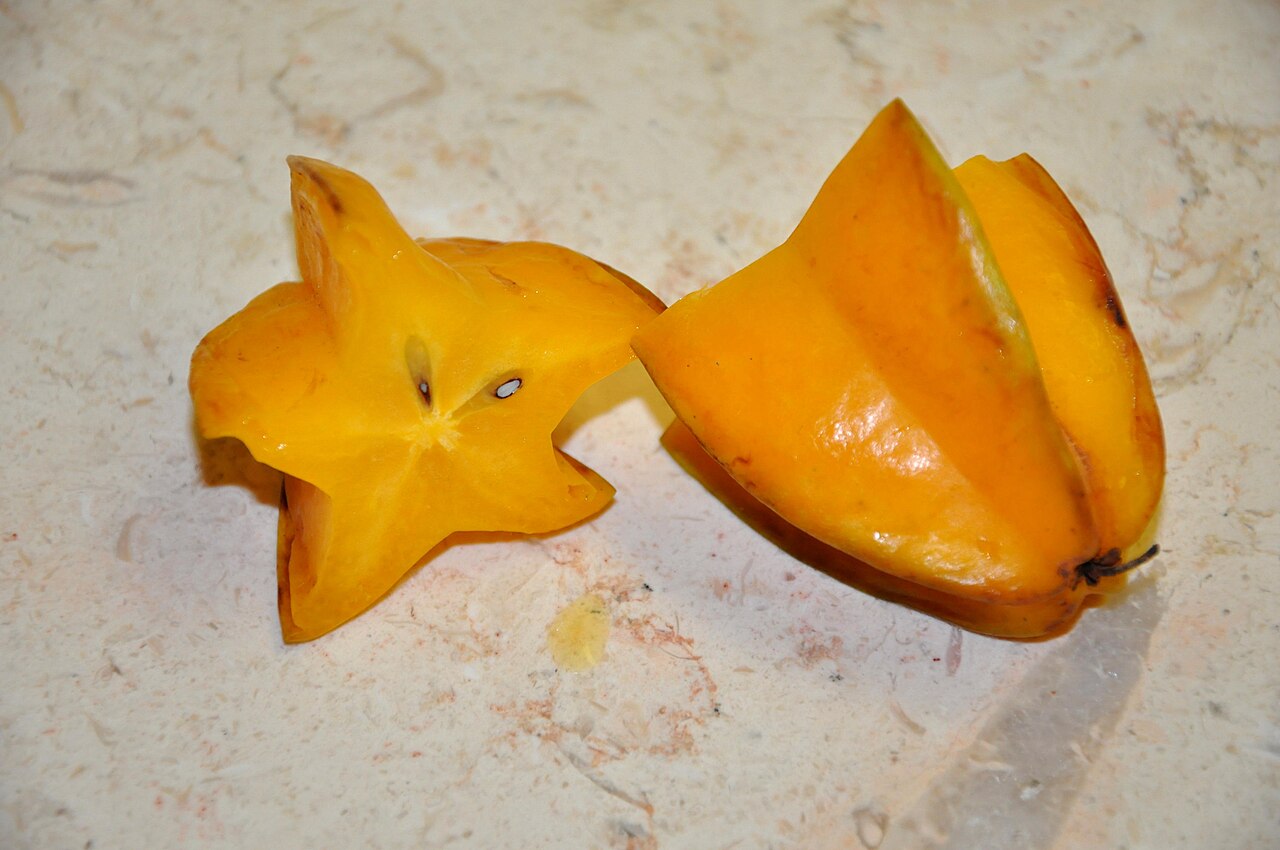
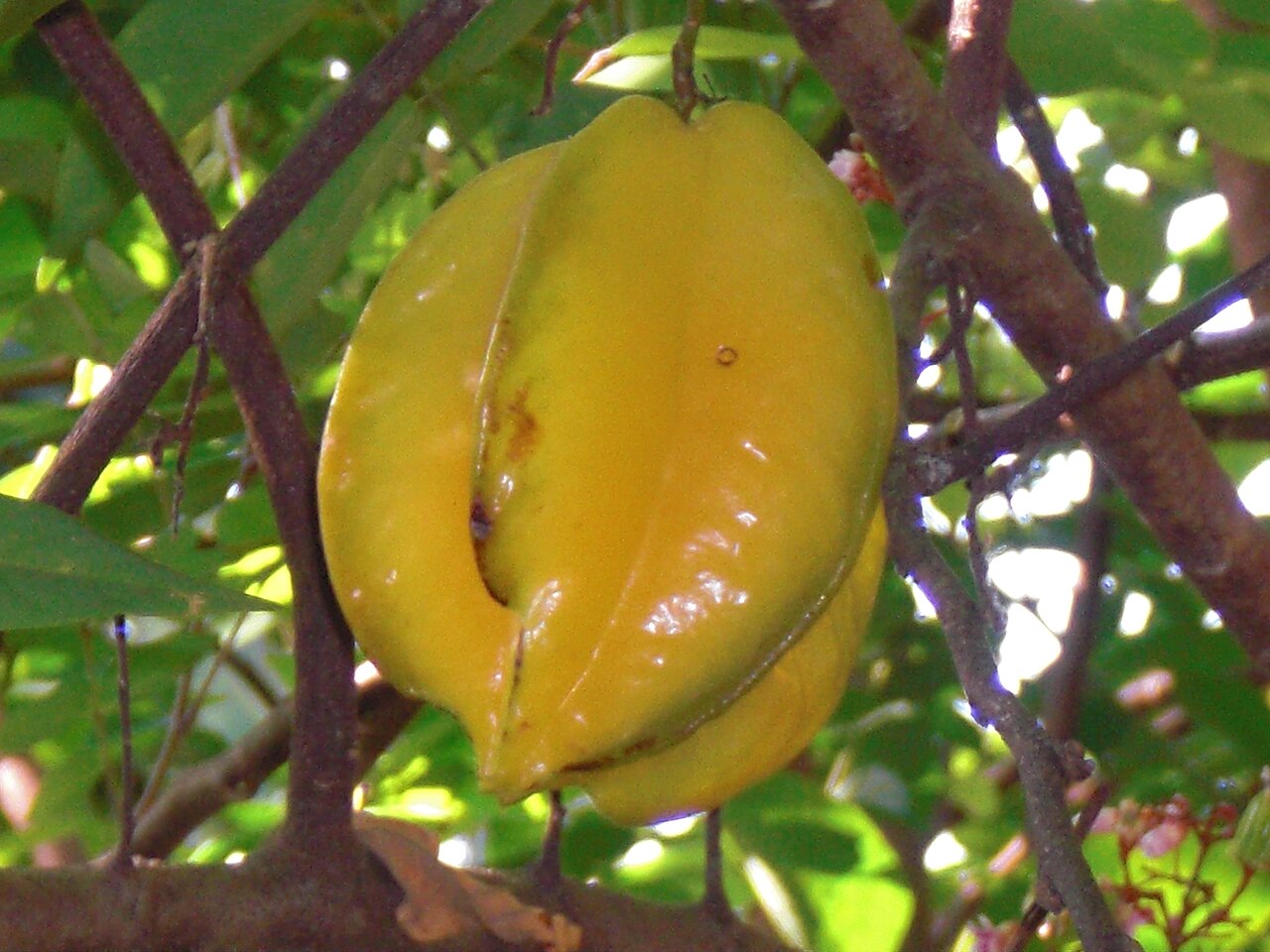
Averrhoa carambola is a species of tree in the family Oxalidaceae native to tropical Southeast Asia; it has a number of common names, including carambola, star fruit and five-corner. It is a small tree or shrub that grows 5 to 12 m tall, with rose to red-purple flowers. The flowers are small and bell-shaped, with five petals that have whitish edges. The flowers are often produced year round under tropical conditions. The tree is cultivated in tropical and semitropical regions for its edible fruits.
Where it grows
Note · FAO 'Other tropical fruits'
Source: FAO STAT — Crops and Livestock Products, 2024
Things worth knowing
- 01
Star fruit, scientifically known as Averrhoa carambola, is a delightful exotic fruit native to tropical Southeast Asia.
- 02
This small tree or shrub, reaching heights of 5 to 12 meters, is adorned with beautiful rose to red-purple, bell-shaped flowers.
- 03
Each of these charming flowers features five petals, often distinguished by delicate whitish edges.
- 04
Star fruit is also recognized by common names such as carambola and five-corner, hinting at its unique appearance.
- 05
The top global producer of this intriguing fruit, according to FAO 2024 data, is China (CHN).
Health & nutrition
- Star fruit is a good source of Vitamin C, which may support immune function.
- With 2.81g of fiber per 100g, it may contribute to digestive health.
- The fruit provides potassium, an important mineral that may help maintain healthy blood pressure levels.
- Its low sugar content of 3.95g per 100g makes it a suitable choice for mindful eating.
- Star fruit offers 26 kcal per 100g, fitting into a balanced dietary approach.
Informational only · not medical advice
Culinary uses
Star fruit, or carambola, is enjoyed worldwide for its unique sweet-tart flavor and attractive star shape when sliced. It is frequently used in fruit salads, as a garnish for desserts and cocktails, and in jams and jellies. In Southeast Asia, it's also incorporated into savory dishes, pickles, and relishes, showcasing its versatility across various cuisines.